
The Raft by Erica Reid
- marychristinedelea

- Jul 19
- 3 min read
The Raft
by Erica Reid
I approach every poem I write
as if I’m going to save a life. —Aaron Abeyta
It was no small feat to locate a phone book—but I did,
and Angela Winston from Oshkosh, Wisconsin,
I have chosen your name at random and I have come
to save your life. I recognize that it is a huge swing
on my part to assume that you need saving—but then
we are all drowning these days, are we not? Don’t you wake up
feeling you’ve reached your limit, that the worst must be past,
only to discover you’re at the top of a spiritual Guggenheim,
a cool, white spiral of descent still awaiting you? Or
perhaps you are bearing the betrayal better than I am,
the dark regime we’ve invented, the great American
miscarriage, the mockery this country makes of itself,
the arc bending away from justice. Maybe you have a friend
or sister to help you shoulder the burden of your complicity.
It is possible you are thriving in 2021, in which case
please write me a poem—but if not, Angela Winston,
if you’ll have me, I would like to write you a life raft—
if not to save you, at least to buoy you until a better poet
comes along. I inflate the raft with my breath, and it sounds
like this: (hff) No matter who you are, your very life
is rebellion, your love is a fist in the air. (hff) Your name
matters. It is right here in the White Pages, surrounded
by relatives and potential accomplices. (hff) You can begin
today, Angela, the work you could not bring yourself to do
yesterday. You have not missed your chance to pluck
the shrapnel from your heart; there is time yet to (hff) carry
the sign, or throw the brick, or fashion the song
from your fear, your hurt, your fury. And finally (hff), a secret
about this raft: that it is built for two. It carries me
as much as it carries you.
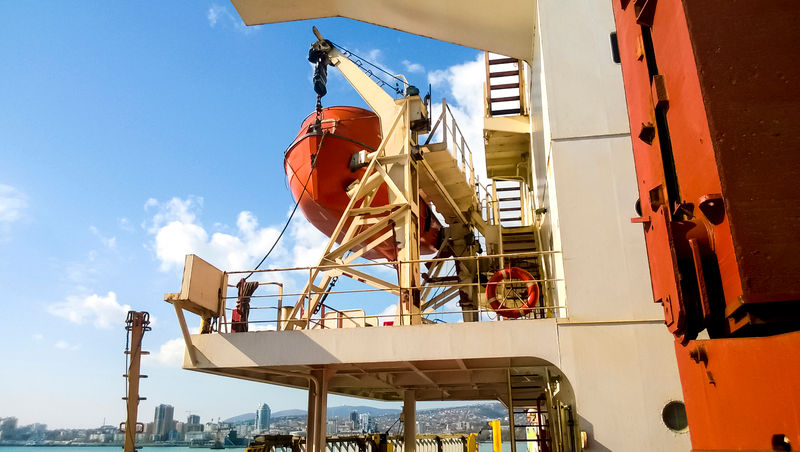
This poem was published in Rattle in their Winter 2023 issue.
Another poem that was written and is about 2021, but is just as relevant today. Do poets have the ability to see into the future? You tell me.
I love this poem for many reasons, not least of which is it balancing the serious (in this case, dire, frightening, and mind-warping) with the humorous and playful.
The epigraph is what all poets feel--this one might be just what someone somewhere needs, this one could save someone's life. Sometimes we feel this in all seriousness. Other times the sarcastic voice in our head mocks us with it. And still at other times we admit we would love this to be true, but chances are not good, and we laugh at ourselves.
Erica takes this epigraph and these feelings and runs with them.
We know we are in for a bit of a romp with the search for a phone book (kids, it used to be both easy and free to find people), and then the speaker's proclamation that she has chosen a random person and
I have come
to save your life.
After this, we get a descriptive list of what many of us faced in 2021; I especially love "a spiritual Guggenheim." There are allusions to politics, but nothing blatant--it is up to the reader to recall what was happening in 2021 . . . starting with January 6.
The speaker then realizes that Angela Winston may be in better shape than the speaker herself. What does she do with that insight? The speaker asks, of course, for Angela to write her a poem!
She quickly returns to offering her own services to Angela--a life raft. The poem becomes downright delightful here, with the poet inserting the sound of the speaker blowing up an inflatable life raft: (hff).
The poem ends with the speaker assuring Angela of the things we all need reminding of at times: that we matter. Not only that, today is open to getting done the things Angela could not face yesterday. There is another list of suggestions for things to do; the poem veers into the political again, but there is also a sense of the personal (pluck/the shrapnel from your heart).
The very end is the perfect combination of the political and the personal in the advice that is both sweet and practical. The raft will hold both the speaker and Angela. Love that ending! A great reminder about poetry, community, politics, a single helping hand. A simple declaration that means so much, and is why we read poems (and some of us write them) and why everyone should read poetry.
Erica is the author of Ghost Man on Second from Autumn House Press. She is the current Poet Laureate of Fort Collins, Colorado. You can read more about her here.


Comments