
For the Thief by Alison Hawthorne Deming

For the Thief
by Alison Hawthorne Deming
Thank you for leaving the desk and the chair,
the books, snapshots and piano.
I've heard of moving van robberies--
coming home from work to percussion
of empty rooms. Thank you for
leaving the trapped air
that softens the blunt edge of my day.
What's mine--the hum of identity--
still surrounds me,
though the electronics
are gone and the jewelry
that was too precious to wear.
Thank you for not spraying
the walls with coke or with piss.
Thank you being a professional,
tidy and quick, entering with a clean
silent cut, not wasting your time
or mine with vandalism or assault.
When my mother was robbed
the closets and drawers were dumped
on the floor. All that was stolen were
towels that had hung in her bathroom.
Her neighbors, the police said, had
lost their cookware. Better our houses
become someone's mall than shooting range.
With my cousins, one in New York took
a knife-blade against her throat.
Another in Madrid was dragged
three blocks by her hair. Thank you
for knowing what you were here for,
for tending to your business without rage.
This poem is from the poet's 2005 book, Genius Loci, published by Penguin Books. You can read more about Alison Hawthorne Deming by clicking here.
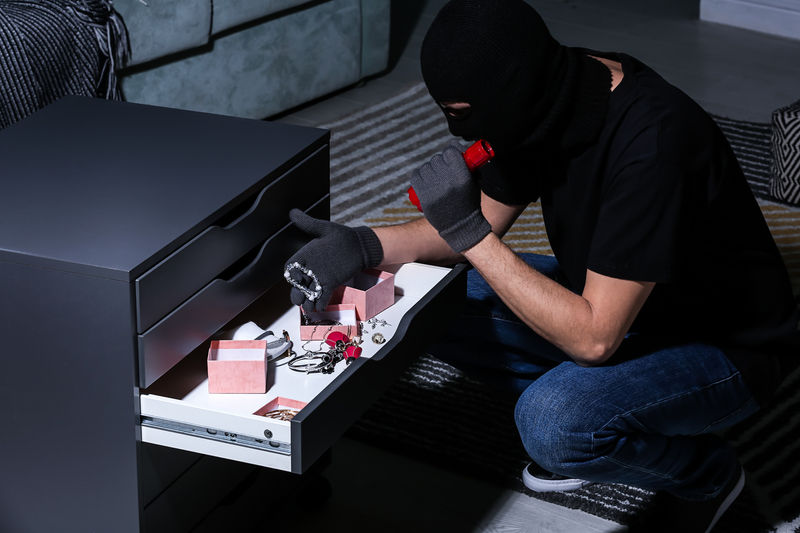
Poems that are titled "To" or "For" someone or something will be directly addressing that person or thing. Here, the speaker talks directly to a thief who has broken into her home while she was at work.
The first word is a surprise, because the speaker thanks the thief! However, we quickly learn why--the speaker is thankful for the items left behind, for the lack of destruction, and for the thief's non-violence towards her.
The poem moves from things of some importance to people of great importance, all the while providing us with details. Photos and books were not taken--we can relate to that relief. The electronics were taken, of course, as well as the jewelry the speaker was too afraid to wear (I have some of that jewelry). The TV, tablet, microwave, etc. can all be replaced. A grandmother's diamond engagement ring, a great aunt's emerald earrings? Probably not.
The destruction of property, and the details we are provided, while fear-inducing, become more horrendous and more personal. A thief spraying soda all over is something we have most likely all read in the newspapers, and it is awful.
But we then hear about the mother of the speaker being robbed of nothing but towels, but having her house trashed. The introduction of a relative moves into the stories of two different cousins--one having a knife pulled on her and another being "dragged three blocks by her hair." Horrifying.
Midway through the poem, the speaker thanks the thief for being "a professional, tidy and quick." She ends the poem with more thanks, this time for "knowing what you were here for,
for tending to your business without rage."
The gratefulness is sincere. Think about when you have had something awful happen or have comforted someone; chances are good some form of "Just be thankful it wasn't worse" was said. It is small comfort, but it is also true. There are times when we really must look for the dark cloud's silver lining.
I love this poem for the movement, for the direct address to the thief, for the examples and details, and for the reminder that in the face of truly unpleasant events, we can get comfort from knowing that things could have been worse.


Comments