
Dusting by Julia Alvarez

Dusting
by Julia Alvarez
Each morning I wrote my name
On the dusty cabinet, then crossed
The dining table in script, scrawled
In capitals on the backs of chairs,
Practicing signatures like scales
While mother followed, squirting
Linseed from a burping can
Into a crumpled-up flannel.
She erased my fingerprints
From the bookshelf and rocker,
Polished mirrors on the desk
Scribbled with my alphabets.
My name was swallowed in the towel
With which she jeweled the table tops.
The grain surfaced in the oak
And the pine grew luminous.
But I refused with every mark
To be like her, anonymous.
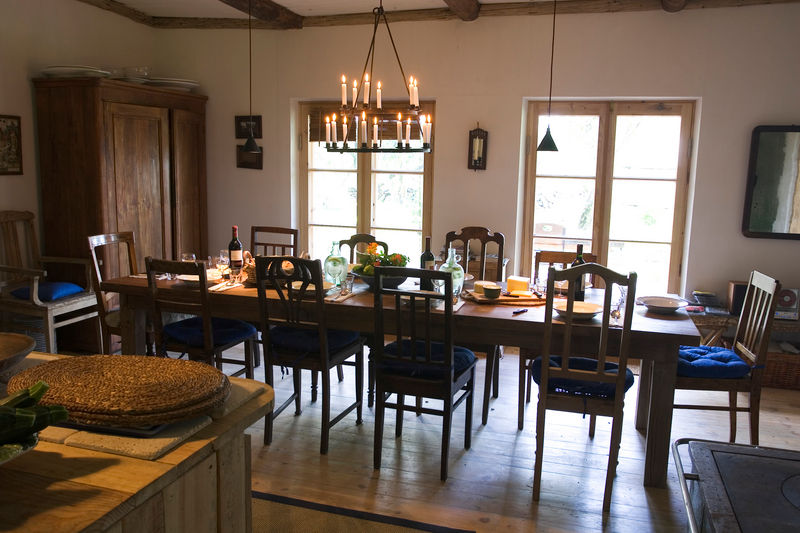
This poem is from Julia Alvarez's 1996 book, Homecoming: New and Collected Poems, published by Plume (Penguin Publishing Group).
Julia Alvarez has written many books--poetry, fiction, books for children. How the Garcia Girls Lost Their Accents, first published in 1991, is not only one of my favorite books, it is one I believe every American should read (yes, I have a list). This poem reminds me of that novel; I think the voice is what does it.
This is a short narrative with lots of wonderful images. My favorite is a sentence with two memorable phrases.
My name was swallowed in the towel
With which she jeweled the table tops.
Of course, as it tells a story, this poem needs to be looked at as a whole. A young girl "writes" her name on the furniture. Her mother follows behind the girl, dusting away the fingerprints left behind.
But then the last two lines! The girl is not just practicing writing--she is asserting her individual identity, telling the world she exists. And we learn that, at least in the girl's eyes, that is the opposite of her mother's existence--she sees her mother as someone who does not want to stand out, does not want her name written everywhere, and does not want to be known. Whether true or not (as children and teens, we often do not really know our parents, do we?), the girl has decided to live her life very differently.
Coming of age literature is always so interesting. It takes a great writer to present that period of life in a realistic way; looking back onto youth as an adult and remembering the decisions, the ideals, the pain, and the triumphs of growing up is not easy. Alvarez captures here what many young people go through--they look at a parent and decide that they want to become a nothing like that adult.
One of my other favorite writers, Rita Dive, also has a poem called Dusting. The speaker in that poem also comes to a realization, but it is a very different poem. I posted it on this blog, and you can read it here.


Comments